
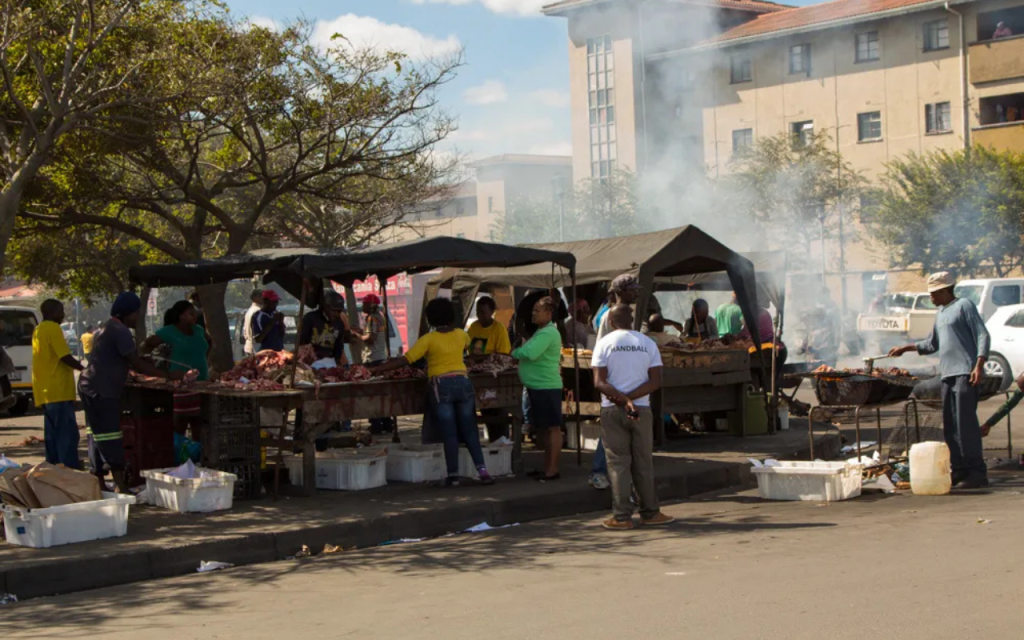
Our guide to township life in Cape Town South Africa, peels back the layers of our township communities, revealing a complex tapestry defined by resilience, innovation, and a vibrant cultural spirit. Established during the colonial and Apartheid eras, these communities were designed for exclusion but became centers of defiant joy and resistance.
For many visitors arriving in Cape Town, the word “township” evokes a mixture of curiosity, uncertainty, and often misconceptions. Images shaped by history books, documentaries, media headlines, and political narratives frequently dominate perceptions long before a person ever sets foot in one.
Yet for millions of South Africans, townships are not tourist attractions, case studies, or historical footnotes. They are home.
As someone who has lived in a township, I often find myself reflecting on the gap between how townships are perceived and how they are actually experienced by those who call them home. While it would be dishonest to ignore the challenges many townships face, it would be equally dishonest to define them solely by those challenges.
To understand township life in Cape Town, one must look beyond the surface. One must move beyond the statistics and headlines and discover the people, relationships, creativity, resilience, and humanity that continue to thrive within these communities.
More Than a Place: A Living Community
Townships were born out of a painful history of segregation and exclusion. Their origins are inseparable from South Africa’s apartheid legacy. Yet reducing townships to that history alone ignores the remarkable evolution that has taken place within them.
Today, townships such as Langa, Khayelitsha, and Gugulethu are dynamic communities filled with entrepreneurs, teachers, artists, healthcare workers, students, professionals, and business owners.
People do not wake up each morning thinking about the label “township.” They wake up thinking about their families, their dreams, their responsibilities, and their aspirations—just like people everywhere else in the world.
The Hidden Economy of Resilience
One of the most remarkable aspects of township life is the culture of resourcefulness.
Walk through any township street and you will discover businesses operating from homes, garages, shipping containers, street corners, and community spaces. Hair salons, catering businesses, mechanics, fashion designers, photographers, tutors, transport providers, and technology entrepreneurs all contribute to a vibrant local economy.
In many ways, townships represent one of South Africa’s most entrepreneurial environments.
When formal opportunities are limited, people create their own.
Innovation is not a luxury here. It is often a necessity.
This entrepreneurial spirit challenges traditional definitions of economic development. It demonstrates that talent and ambition are not determined by postcode, infrastructure, or income level.
The Strength of Social Capital
One of the greatest misconceptions about township life is that poverty automatically means hopelessness.
What is often overlooked is the extraordinary social capital that exists within these communities.
Neighbours know one another.
Families support one another.
Communities rally around funerals, celebrations, weddings, graduations, and times of hardship.
Children are often raised not only by parents but by entire communities.
This collective spirit creates a sense of belonging that many modern urban environments struggle to replicate.
While challenges certainly exist, there is also a powerful culture of mutual support that helps people navigate those challenges together.
The Creative Soul of the Township
Perhaps nowhere is the spirit of township life more visible than through art, music, food, storytelling, and cultural expression.
Townships have produced some of South Africa’s most influential musicians, performers, poets, activists, and artists.
Creativity here is not confined to galleries or concert halls. It lives on street corners, in community centres, churches, schools, local restaurants, and cultural spaces such as Guga S’thebe in Langa.
Art serves many purposes. It preserves history. It celebrates identity. It challenges injustice. It creates economic opportunity. Most importantly, it allows communities to tell their own stories rather than having those stories told for them.
The Complexity Visitors Rarely See
Tourists often ask whether township life is “good” or “bad.”
The reality is far more complex. Townships are places of immense opportunity and significant challenge. They are places where hardship and hope often coexist. A young entrepreneur may be building a thriving business while living in an area with infrastructure challenges. A student may be pursuing a university degree while sharing a home with multiple family members. A community may face economic difficulties while simultaneously producing extraordinary examples of leadership, innovation, and resilience. The danger lies in viewing townships through a single lens.
No community can be understood through one narrative.
Why Township Tourism Matters
When done respectfully, township tourism creates an opportunity for genuine human connection.
Visitors discover that the people they meet are far more complex, ambitious, talented, and relatable than stereotypes suggest. Residents have an opportunity to share their stories, showcase local businesses, and participate directly in the local tourism economy.The most meaningful township tours are not about poverty. They are about perspective. They challenge assumptions. They create dialogue. They remind us that communities cannot be reduced to headlines.
Here’s what you should expect;
- The Economic Pulse: From “container” barbershops to bustling street markets, the township is a hub of informal entrepreneurship and raw creativity.
- Architecture of Contrast: You will find a startling spectrum—from the original migrant hostels to the modern, middle-class mansions that signal a thriving future.
- The Sensory Rhythm of the Streets; To visit a township is to engage all five senses:
- The Sound: The constant hum of life—children playing, marimba beats from local centers like Guga S’Thebe, and the melodic click of Xhosa conversations.
- The Smell: The unmistakable aroma of wood-smoke and sizzling Chesa Nyama (braai), chicken feet or sheep heads that draws neighbors together at every corner.
- The Visuals: A explosion of color found in massive street-art murals and the vibrant fashion of residents heading to Sunday church.
Why Langa is the Essential First Chapter
While Cape Town has many townships, Langa is the oldest and most historically significant.
-
Walking Through History: Because it was established in 1923, Langa offers a deep, walking-scale look at a century of South African evolution.
-
Accessible Authenticity: Its proximity to the CBD makes it the perfect entry point for travelers seeking a safe, ethical, and deeply human connection.
The Future of Township Life
The future of Cape Town’s townships will not be defined solely by government policy, infrastructure investment, or economic development programs.
It will also be shaped by the people who live there. Every day, young entrepreneurs launch businesses. Artists create new forms of expression. Students pursue education. Community leaders build initiatives that strengthen local neighborhoods. Residents continue to reimagine what is possible despite the obstacles they face. The future of township life is not a story of limitation. It is a story of potential.
Booking with Langa Tours: Narrative Sovereignty
We believe that a township story should only be told by those who call it home.
-
Local-Born Curators: As Langa natives, we don’t just “show” you the streets; we introduce you to our neighbors.
-
Door-to-Door Connection: We personally pick you up at your hotel, ensuring you are supported from the moment you leave your doorstep to the moment you return.
-
True Empowerment: By choosing Langa Tours, you bypass the big agencies and ensure your visit directly supports registered, Langa-born guides.
Final Thoughts
To truly understand township life in Cape Town is to recognize its complexity. It is to acknowledge the challenges without allowing them to eclipse the strengths. It is to see resilience without romanticizing hardship. It is to celebrate culture without ignoring history.
Most importantly, it is to recognize that behind every street, every home, every business, and every community space are people whose lives, dreams, and aspirations are every bit as meaningful and significant as those found anywhere else in the world.
Townships are not simply places to visit. They are communities to understand.
And in understanding them, we often learn something profound about ourselves, about society, and about the remarkable capacity of people to build hope, opportunity, and belonging in even the most challenging circumstances.